● President says painful reforms have corrected Nigeria’s economic course
● Promises lower living costs, jobs, industrial growth, wider prosperity
● HURIWA blames poor governance, weak institutions, insecurity for economic woes
● Okorie warns ethnic, religious sentiments may shape 2027 elections
● Ugwu blames leadership, corruption, urges credible polls, greater voter participation
● Ojedokun seeks security, fiscal reforms, decentralisation to strengthen governance
● Ayoola, George decry resource mismanagement, poverty, weak infrastructure
● Igbuzor urges governance built around devt, active citizenship
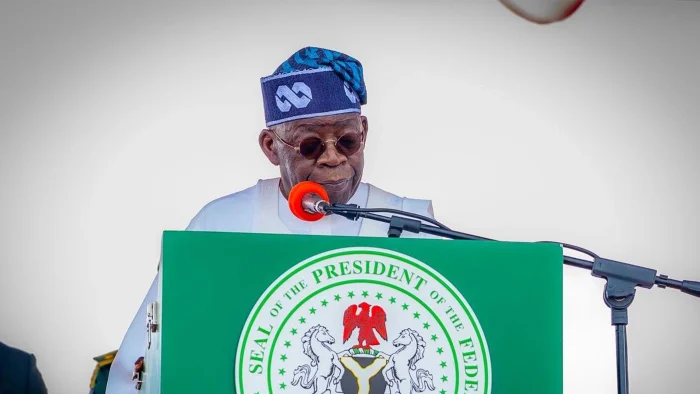
President Bola Tinubu yesterday declared that Nigeria had reached a “turning point,” saying the painful economic reform phase was over and the country had entered a new “age of prosperity” focused on reducing the cost of living, creating jobs and ensuring that the benefits of economic growth were widely shared.
Tinubu made the declaration in his Independence Day address to mark Nigeria’s 66th anniversary, titled “From Reform to Prosperity”, in which he defended the economic policies of his administration and urged Nigerians to stay the course.
The President’s speech came as some stakeholders and analysts regretted that, despite various reforms embarked upon by successive Federal Governments, the country was yet to come out of the woods economically and socially.
Respondents who spoke to The Print Media, such as former Deputy National Chairman of the Peoples Democratic Party (PDP), Chief Bode George, reviewed the years since independence and concluded that the country had failed to make the progress expected of a nation with its resources and potential.
“For 66 years, we’ve gone through a lot of experiences, the good, the bad, and the ugly. Politically, we have not been able to move in the direction of civilised countries,” he said.
For its part, the Human Rights Writers Association of Nigeria (HURIWA) asserted that Nigeria’s promise of economic prosperity, security and social justice remained undermined by poor governance, weak institutions and insecurity.
Meanwhile, Tinubu said the reforms undertaken since his assumption of office had corrected the country’s economic direction, describing them as painful but necessary treatment for longstanding structural problems.
Using a cancer patient as an analogy, the President said Nigeria had for too long treated the symptoms of its economic problems rather than confronting their underlying causes.
“By 2023, poverty was rising, and hope was nearly gone. The country’s situation was darker than ever. We had no choice but to act,” he said.
He acknowledged that the reforms had produced painful “side effects”, but argued that the hardship should not be confused with the underlying economic problems they were designed to address.
“Our reforms did not create the weaknesses in our economy. They confronted them,” he said, while warning against attempts to reverse the policies and return to what he described as the “abuse of addictive subsidies”.
According to him, three and a half years into his administration, economic indicators showed that the reforms were yielding results.
He said the economy had grown by more than four per cent this year, with both the oil and non-oil sectors contributing to what he described as a period of stable growth.
Tinubu also cited reduced oil theft, a substantial fall in inflation from its peak, rebuilt foreign reserves and a more stable foreign exchange market as evidence of progress.
He said Nigeria recorded its highest-ever non-oil export revenue in 2025, exceeding $6 billion.
“These are not idle claims. International observers, journalists, NGOs and multilateral institutions can see the change,” he said, adding that foreign direct investment continued to rise.
