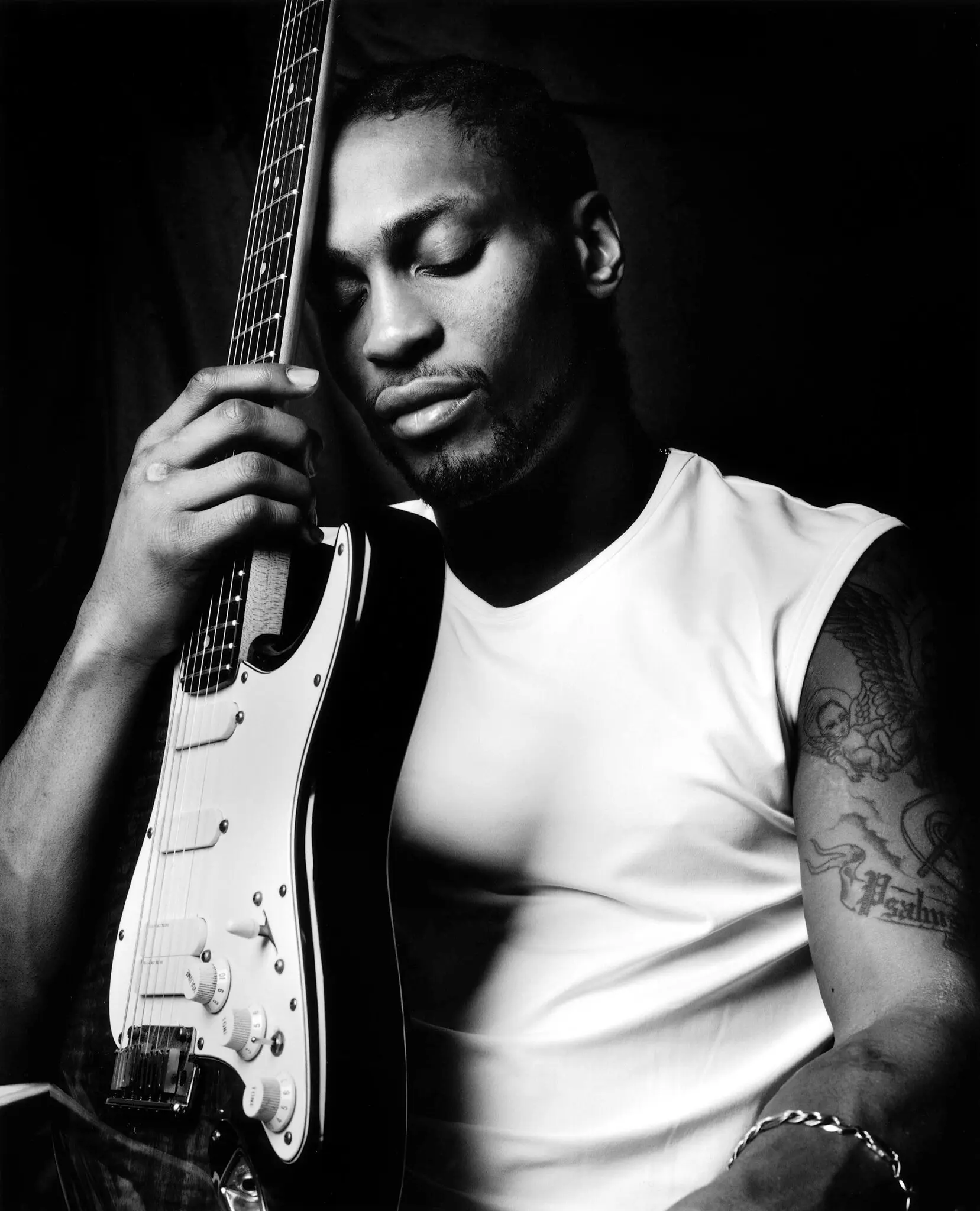
D’Angelo, the acclaimed neo-soul singer who found fame in the 1990s and early 2000s with an innovative and sensuous take on 1970s R&B, as well as with a risqué music video that briefly made him a pop culture phenomenon but helped drive him into nearly a decade of seclusion, died on Tuesday. He was 51.
His death was confirmed in a statement by his family, which did not say where he died but gave the cause as cancer.
During the first phase of his career, leading up to his triumph with the 2000 album “Voodoo,” D’Angelo was a leading light of a revolution in soul music, melding the seductive melodies of classic singers like Al Green and Marvin Gaye with the beats and urgency of hip-hop.
His biggest songs, like “Lady,” “Brown Sugar” and “Untitled (How Does It Feel),” were hailed as supreme examples of the trend, which sought not a revival of Black pop traditions but a transformation of them. Each of those tracks became a Top 10 hit on Billboard’s R&B chart, D’Angelo went into heavy rotation on Black radio stations and “Lady” went to No. 10 on Billboard’s all-genre Hot 100 chart.

D’Angelo’s signature vocal style was a delicately expressive falsetto that, like Prince’s, could build to an ecstatic wail. Also like Prince, he arranged his music meticulously, served as his own producer and played guitar. Critics exalted him as a worthy successor to the greatest traditions of Black pop.
“He is R&B Jesus, and I’m a believer,” Robert Christgau wrote in The Village Voice in 2000.
“Untitled,” which unfolds slowly, at an erotic tempo — it runs to more than seven minutes in its full album version — also crossed over to the wider pop market, thanks in no small part to its music video.
In the video, D’Angelo stood against a dark backdrop as a Black Adonis in cornrows, apparently naked except for a gold chain with a crucifix. (The video framed its lower edge just below his waist.) The camera slowly scanned his muscled, sweat-drenched physique as he brought the song to an orgasmic climax.
The video established D’Angelo as an unabashed sex symbol — The New York Times called it “pure beefcake” — and bolstered his commercial power, sending “Voodoo,” the album that the song appeared on, to No. 1 for two weeks.

In 2001, “Voodoo” won best R&B album at the Grammys, and “Untitled” took best male R&B vocal performance.
But D’Angelo, the son of a Pentecostal minister who sometimes described his art in spiritual terms, grew uncomfortable with being pigeonholed as a heartthrob. After a breakdown on tour, he fell into a depression and struggled with alcohol and drug abuse before going to rehab.
D’Angelo was born Michael Eugene Archer in South Richmond, Va., on Feb. 11, 1974. His father was a Pentecostal preacher and his mother was a legal secretary. As a child, he played organ and was part of the choir at his father’s church. He also spent time poring through the broad-ranging record collection of an uncle, and studied classical music briefly.
After moving to Chesterfield, Va., for high school, he started a hip-hop group, IDU — which stood for Intelligent, Deadly but Unique — with friends, and appeared in talent shows. At 16, after winning a local contest, he came to New York to compete in Amateur Night at the Apollo Theater — where, he said, he won with a cover of Johnny Gill’s New Jack Swing track “Rub You the Right Way.”
He soon returned to New York looking for a record deal. Auditioning for a music publisher, he performed a Jodeci song, a gospel song and a Miles Davis song: three distinct strands of his musical obsessions that he would soon intertwine. By his late teens, he was calling himself D’Angelo, a nickname that was said to be derived from Michelangelo.
He was signed to EMI, and his first album, “Brown Sugar” (1995), laid out much of the approach that he would follow throughout his career: dense, soulful songs with multilayered vocals — all sung by D’Angelo himself — that drew from Prince, classic soul and traces of the gospel music he grew up with.

